
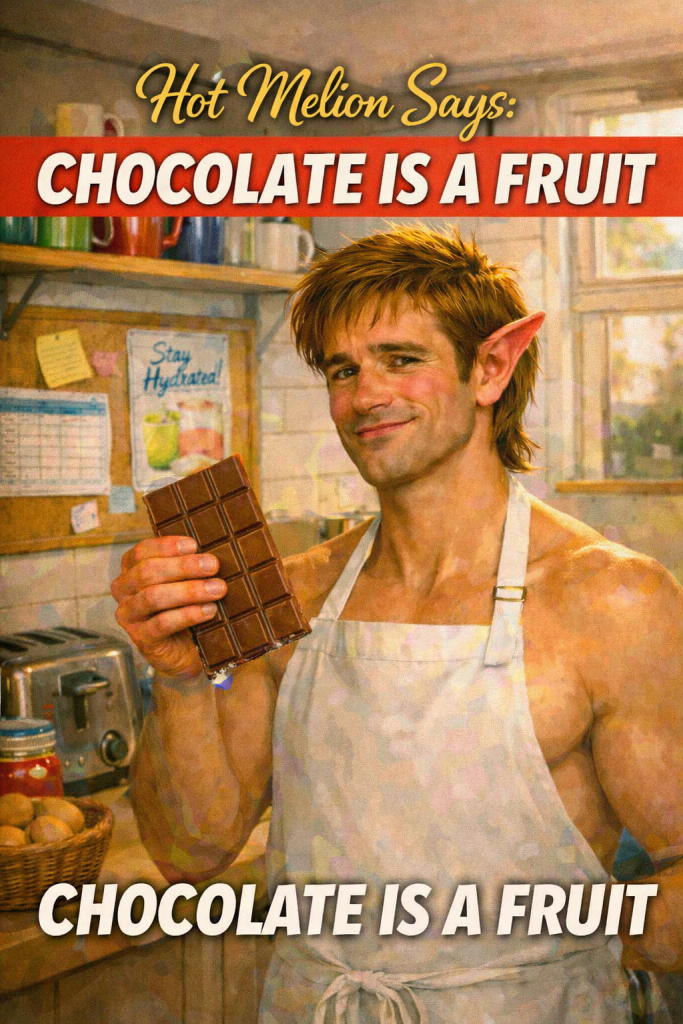

Surely the most unforeseen development of the mid 2010s was the “Hot Melion” phenomenon.
Rumours of a lost page of the “Elf of Finland” calendar—the July plate, supposedly featuring a buff version of Melion wearing only an apple—began circulating online in 2013, giving rise to the meme “Hot Melion”.
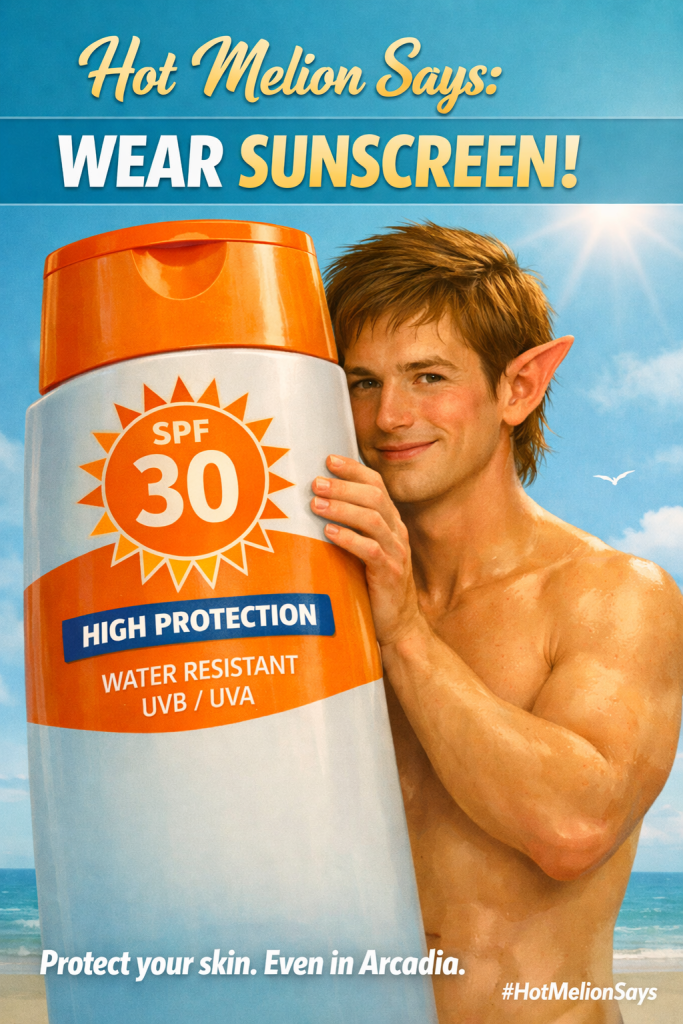
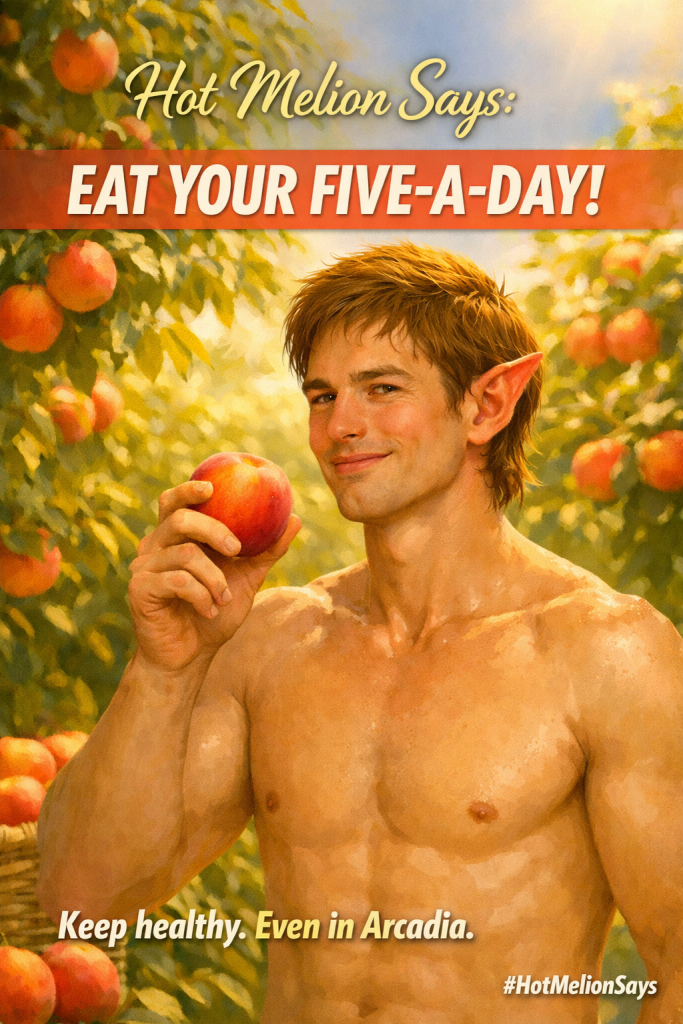
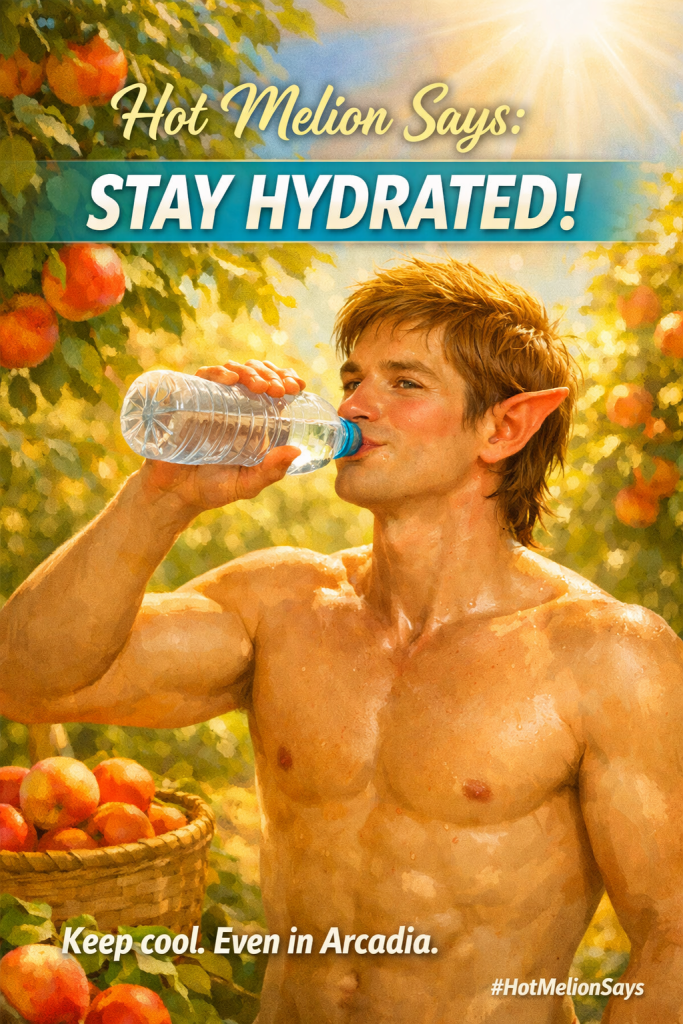
“Hot Melion” would doubtless have sunk into internet obscurity had not the UK’s National Health Service run an official public-health poster campaign using the tagline Hot Melion Says: Wear Sunscreen, quickly followed by Hot Melion Says: Keep Hydrated and Hot Melion Says: Eat Your Five-a-Day. For one surreal summer, Hot Melion was everywhere: on the sides of buses, on the London Underground, even on the big screen in Piccadilly Circus.
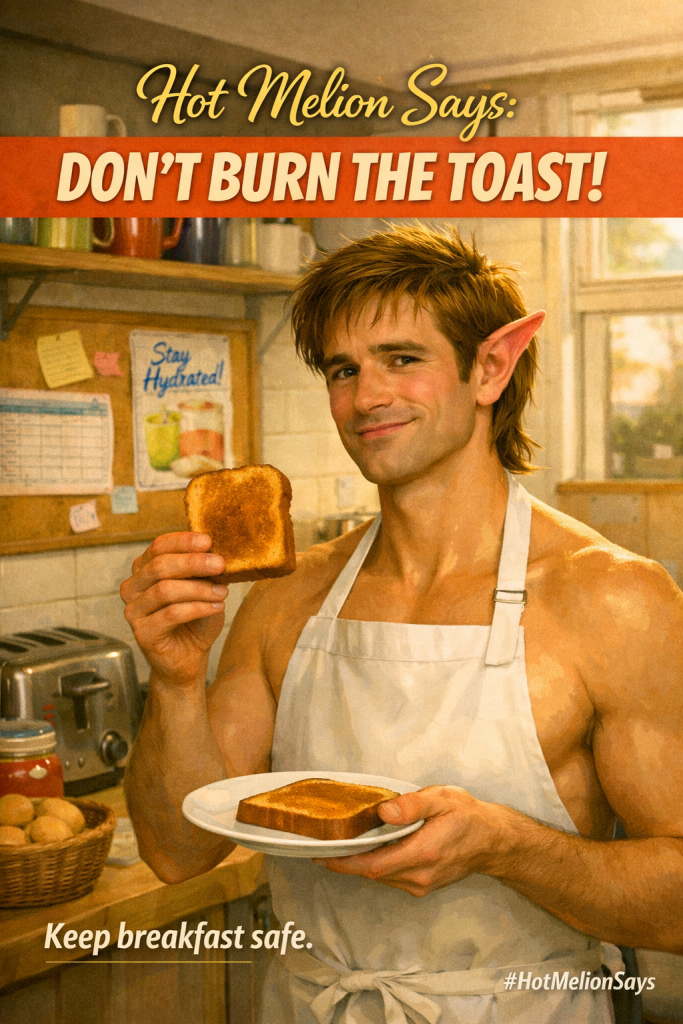
Student parodies quickly circulated, most badly drawn or badly photoshopped. But one, Hot Melion Says: Don’t Burn the Toast surpassed them all, featuring high-quality original artwork of Hot Melion, now in a chef’s apron, standing in a student kitchen and brandishing a plate of breakfast.
“Although you can tell that the Hot Melion in the Toast poster is clearly different from the one in the official NHS campaign, it quickly became the inspiration for a new set of parodies,” says Dr Paola Aspinetti, a Senior Lecturer in the History of the Internet at Cambridge University.
“Hot Melion Says: Chocolate Is A Fruit is typical: the piece of toast Hot Melion holds is replaced by a bar of chocolate, and his other arm, holding the plate, is simply airbrushed out. But the homage has a charm of its own.”
As with all internet fads, the craze soon fizzled out.
But then in 2025 Hot Melion made a brief comeback in an AI-generated image titled Hot Melion Says Six Seven, this time wearing a black muscle top and standing, somewhat inexplicably, in a gym.
“Typical of early AI images,” says Dr Aspinetti, “if you look carefully, Hot Melion has six fingers on his right hand.”
We don’t know what Melion would say if he discovered that he’d briefly become a queer icon, but we imagine he would be secretly delighted.
Melion, Meme and Melancholy: The Semiotics of Fruit in the Digital Landscape, by Dr Paola Aspinetti, is published by Arkham University Press.
Leave a Reply