
There have been all sorts of Elf and Orc spin-off media, some official, some created by you, the dedicated readers. But none is more bizarre than the 1978 calendar illustrated by an artist using the pseudonym “Elf of Finland”.
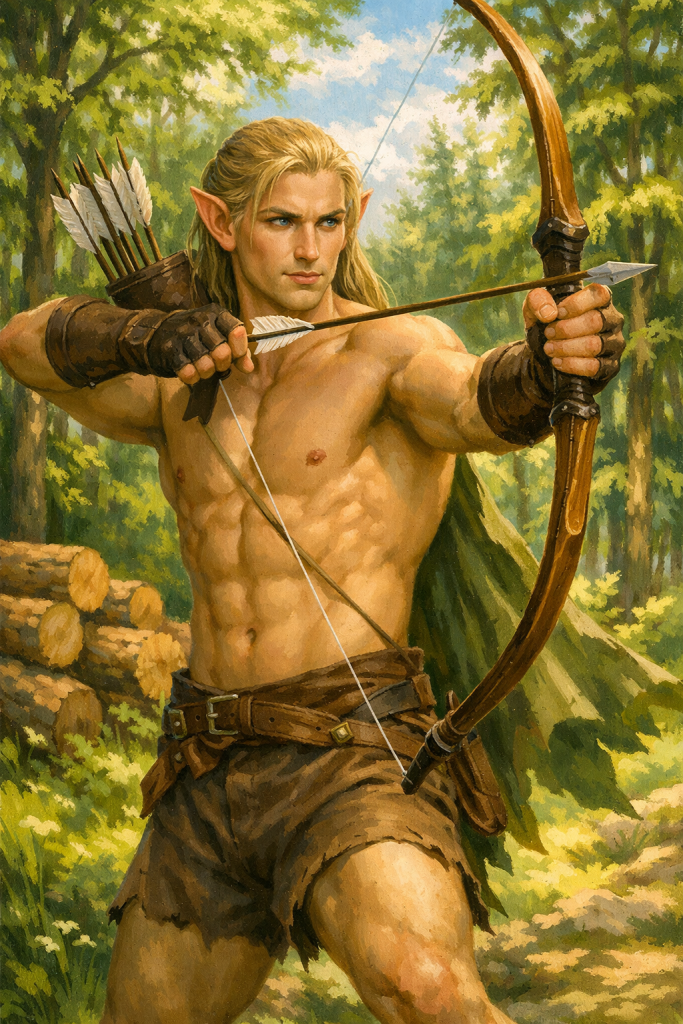
Ostensibly a “tribute” to Margaret Moore’s Elf and Orc novels, it was in practice something quite different: twelve lavishly illustrated plates depicting the beloved characters in a kind of hyper-stylised, idealised masculinity, familiar to anyone who knows the more adventurous corners of mid-century illustration. Today it looks all very tame. In 1978 it would have been scandalous.
Each month offered a diffetent tableau: Elf, Orc and their friends rendered as gleaming paragons of muscle and myth, their poses heroic to the point of parody. The art style drew on a Northern European sensibility—crisp lines, leather and light—that transformed Moore’s gentle pastoral fantasy into a fantasy of an altogether different kind.
The tone was unabashedly homoerotic—January, entitled The Arrows of Desire, for example, with Elf bare-chested in cut-off leather shorts about to shoot an arrow.
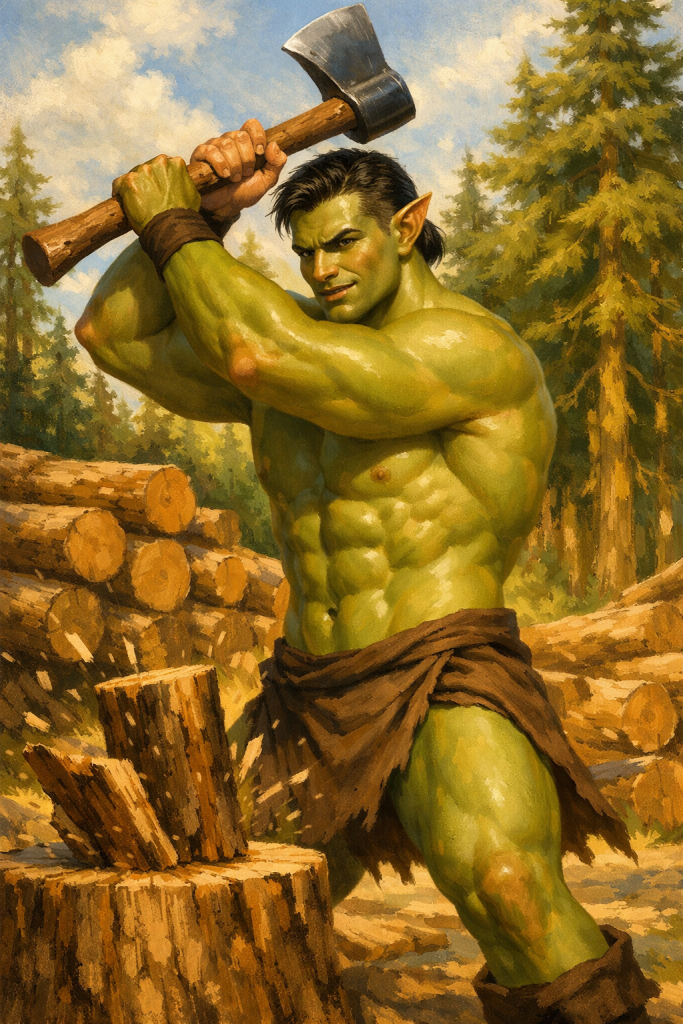
Few of the plates now survive. A poster based on March—officially titled At the Wood Pile but commonly known as Orc’s Chopper—was available from a well-known high-street stationer in the 1990s. It featured Orc in a lumberjack setting, axe raised, muscles exaggerated to mythic proportions, and wearing a loin cloth that was most certainly not up to the task required of it.
July—The Apple of His Eye—is the most mysterious of all. The plate is rumoured to have featured a heavily-muscled Melion, posed in the orchard, wearing nothing but a strategically-placed piece of fruit—an apple in some tellings, a pear in others. No copies of this print are known to exist.
According to long-standing rumours, in the early 1990s a mysterious collector known only as “L.” tracked down and purchased all surviving copies, thus removing them from circulation.
But the possibly-mythical July page almost certainly gave rise to the Hot Melion phenomenon of the mid 2010s—a wave of affectionate, tongue-in-cheek fan art, and an official UK government public health poster campaign, celebrating Melion’s unexpected status as a queer icon.
Leave a Reply